 Add to Chrome
 Add to Firefox
 Add to Edge
Inference Time Optimization with Confidence Dynamics
May 24, 2026
Inference time optimization techniques, such as repeated sampling, have significantly advanced the reasoning capabilities of Large Language Models (LLMs). However, the critical role of model uncertainty remains largely underexplored in these optimization strategies. In this paper, we investigate the dynamics of confidence along reasoning trajectories and for first time reveal a surprising and unique pattern: correct answer traces tend to exhibit confidence improvement over time (positive confidence gain), while incorrect traces show attenuated or declining confidence as reasoning proceeds. Based on this observation, we propose Confidence Dynamic Gain (CDG) based voting, which incorporates how the confidence trajectory of the response evolves along the reasoning chain. Experiments across four open-source architectures (DeepSeek-R1, gpt-oss, Gemma-3, Qwen-QwQ) on the AIME24/25, HMMT25, and BRUMO25 benchmarks demonstrate that CDG yields a significant performance boost over baselines. These results demonstrate that our method provides a robust discriminative signal for improving answer selection in LLM reasoning. We also provide theoretical insights for this phenomenon. Code will be released at https://github.com/Accenture/CDG.git.

UniVL: Unified Vision-Language Embedding for Spatially Grounded Contextual Image Generation
May 20, 2026We introduce spatially grounded contextual image generation, a controllable image generation task that reframes the conditioning paradigm. Instead of supplying a reference image and a global text prompt through two separate encoders, one for vision and one for language, UniVL is trained to bind semantics to spatial locations directly from a single unified visual input, where the textual instruction is rendered onto the spatial mask. This removes the need for a standalone text encoder at inference time. The resulting model supports contextual image generation by following user-specified instructions about what should appear where, while substantially reducing computation. To address this task, we propose a framework in which the UniVL encoder, adapted from an optical-character-recognition-pretrained backbone, reads the unified condition optically and produces a UniVL embedding, fVIL, that fuses visual and semantic intent with spatial locations in a single token sequence. A two-stage pipeline first aligns UniVL with the VAE embedding space and then conditions a pretrained diffusion backbone entirely on UniVL embeddings, eliminating the standalone text encoder, such as T5. Although this reframing uses a deliberately minimal text interface, it yields strong empirical gains. On UniVL-ImgGen, a benchmark of 477K mask-annotated images that we construct for training and evaluation, UniVL improves image quality over text-prompted baselines, reducing FID from 14 to 11 and increasing PSNR from 16 to 20. It also eliminates the text encoder entirely, reducing inference TFLOPs by up to 52% and runtime by up to 44%. Additional ablation studies validate the contributions of the proposed components, paving the way for efficient, spatially grounded image generation with a unified conditioning paradigm.
Memex(RL): Scaling Long-Horizon LLM Agents via Indexed Experience Memory
Mar 04, 2026Large language model (LLM) agents are fundamentally bottlenecked by finite context windows on long-horizon tasks. As trajectories grow, retaining tool outputs and intermediate reasoning in-context quickly becomes infeasible: the working context becomes prohibitively long, eventually exceeds the context budget, and makes distant evidence harder to use even when it is still present. Existing solutions typically shorten context through truncation or running summaries, but these methods are fundamentally lossy because they compress or discard past evidence itself. We introduce Memex, an indexed experience memory mechanism that instead compresses context without discarding evidence. Memex maintains a compact working context consisting of concise structured summaries and stable indices, while storing full-fidelity underlying interactions in an external experience database under those indices. The agent can then decide when to dereference an index and recover the exact past evidence needed for the current subgoal. We optimize both write and read behaviors with our reinforcement learning framework MemexRL, using reward shaping tailored to indexed memory usage under a context budget, so the agent learns what to summarize, what to archive, how to index it, and when to retrieve it. This yields a substantially less lossy form of long-horizon memory than summary-only approaches. We further provide a theoretical analysis showing the potential of the Memex loop to preserve decision quality with bounded dereferencing while keeping effective in-context computation bounded as history grows. Empirically, on challenging long-horizon tasks, Memex agent trained with MemexRL improves task success while using a significantly smaller working context.
Self-Supervised Learning via Flow-Guided Neural Operator on Time-Series Data
Feb 12, 2026Self-supervised learning (SSL) is a powerful paradigm for learning from unlabeled time-series data. However, popular methods such as masked autoencoders (MAEs) rely on reconstructing inputs from a fixed, predetermined masking ratio. Instead of this static design, we propose treating the corruption level as a new degree of freedom for representation learning, enhancing flexibility and performance. To achieve this, we introduce the Flow-Guided Neural Operator (FGNO), a novel framework combining operator learning with flow matching for SSL training. FGNO learns mappings in functional spaces by using Short-Time Fourier Transform to unify different time resolutions. We extract a rich hierarchy of features by tapping into different network layers and flow times that apply varying strengths of noise to the input data. This enables the extraction of versatile representations, from low-level patterns to high-level global features, using a single model adaptable to specific tasks. Unlike prior generative SSL methods that use noisy inputs during inference, we propose using clean inputs for representation extraction while learning representations with noise; this eliminates randomness and boosts accuracy. We evaluate FGNO across three biomedical domains, where it consistently outperforms established baselines. Our method yields up to 35% AUROC gains in neural signal decoding (BrainTreeBank), 16% RMSE reductions in skin temperature prediction (DREAMT), and over 20% improvement in accuracy and macro-F1 on SleepEDF under low-data regimes. These results highlight FGNO's robustness to data scarcity and its superior capacity to learn expressive representations for diverse time series.
Resolution-Independent Neural Operators for Multi-Rate Sparse-View CT
Dec 13, 2025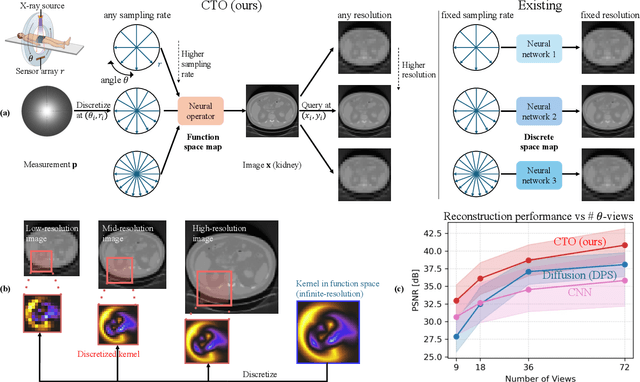
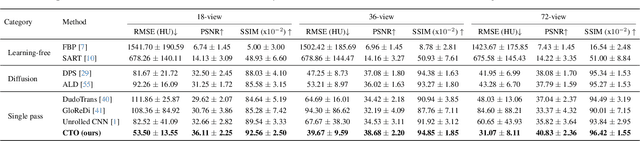
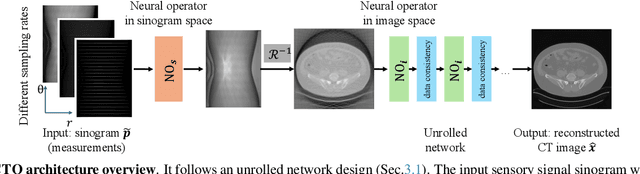
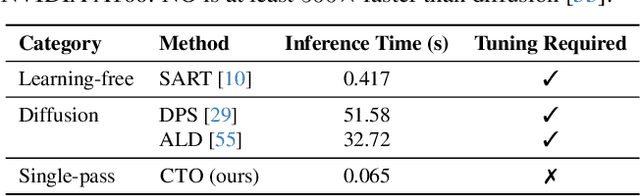
Sparse-view Computed Tomography (CT) reconstructs images from a limited number of X-ray projections to reduce radiation and scanning time, which makes reconstruction an ill-posed inverse problem. Deep learning methods achieve high-fidelity reconstructions but often overfit to a fixed acquisition setup, failing to generalize across sampling rates and image resolutions. For example, convolutional neural networks (CNNs) use the same learned kernels across resolutions, leading to artifacts when data resolution changes. We propose Computed Tomography neural Operator (CTO), a unified CT reconstruction framework that extends to continuous function space, enabling generalization (without retraining) across sampling rates and image resolutions. CTO operates jointly in the sinogram and image domains through rotation-equivariant Discrete-Continuous convolutions parametrized in the function space, making it inherently resolution- and sampling-agnostic. Empirically, CTO enables consistent multi-sampling-rate and cross-resolution performance, with on average >4dB PSNR gain over CNNs. Compared to state-of-the-art diffusion methods, CTO is 500$\times$ faster in inference time with on average 3dB gain. Empirical results also validate our design choices behind CTO's sinogram-space operator learning and rotation-equivariant convolution. Overall, CTO outperforms state-of-the-art baselines across sampling rates and resolutions, offering a scalable and generalizable solution that makes automated CT reconstruction more practical for deployment.
Ultrasound Lung Aeration Map via Physics-Aware Neural Operators
Jan 02, 2025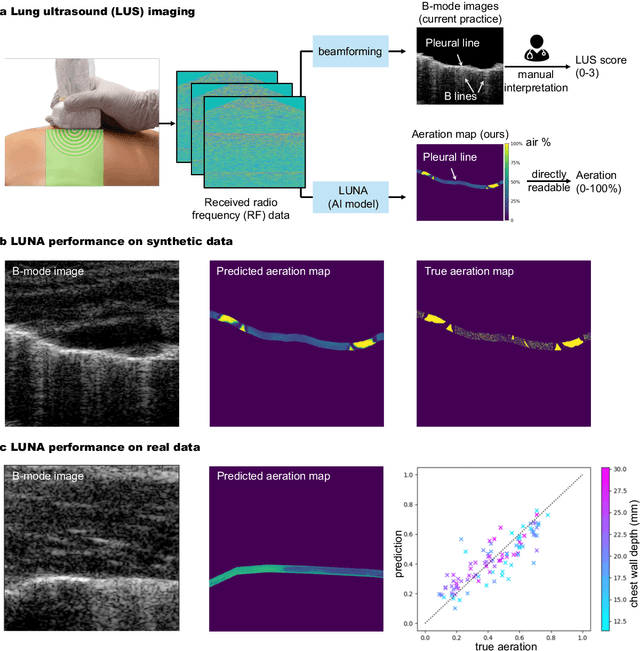

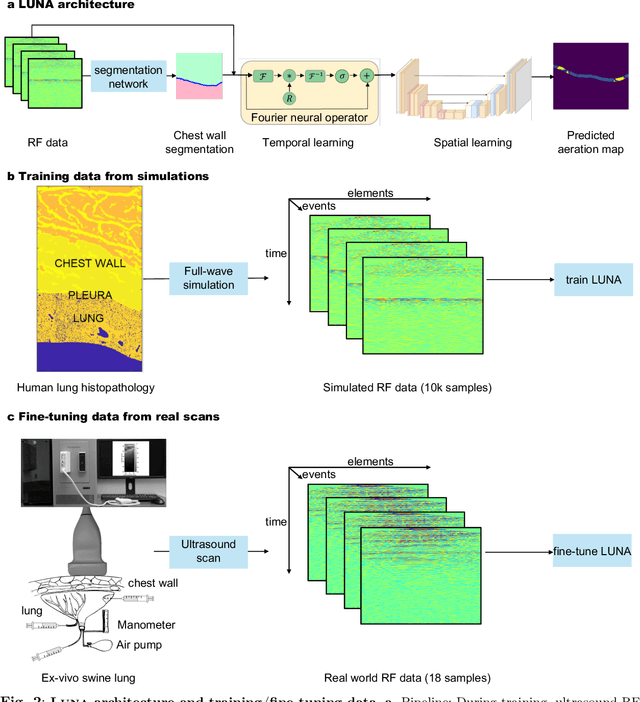
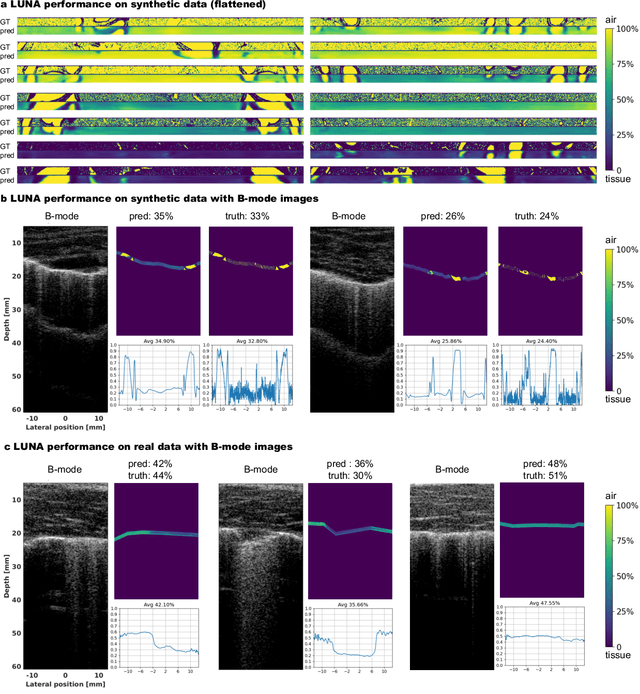
Lung ultrasound is a growing modality in clinics for diagnosing and monitoring acute and chronic lung diseases due to its low cost and accessibility. Lung ultrasound works by emitting diagnostic pulses, receiving pressure waves and converting them into radio frequency (RF) data, which are then processed into B-mode images with beamformers for radiologists to interpret. However, unlike conventional ultrasound for soft tissue anatomical imaging, lung ultrasound interpretation is complicated by complex reverberations from the pleural interface caused by the inability of ultrasound to penetrate air. The indirect B-mode images make interpretation highly dependent on reader expertise, requiring years of training, which limits its widespread use despite its potential for high accuracy in skilled hands. To address these challenges and democratize ultrasound lung imaging as a reliable diagnostic tool, we propose LUNA, an AI model that directly reconstructs lung aeration maps from RF data, bypassing the need for traditional beamformers and indirect interpretation of B-mode images. LUNA uses a Fourier neural operator, which processes RF data efficiently in Fourier space, enabling accurate reconstruction of lung aeration maps. LUNA offers a quantitative, reader-independent alternative to traditional semi-quantitative lung ultrasound scoring methods. The development of LUNA involves synthetic and real data: We simulate synthetic data with an experimentally validated approach and scan ex vivo swine lungs as real data. Trained on abundant simulated data and fine-tuned with a small amount of real-world data, LUNA achieves robust performance, demonstrated by an aeration estimation error of 9% in ex-vivo lung scans. We demonstrate the potential of reconstructing lung aeration maps from RF data, providing a foundation for improving lung ultrasound reproducibility and diagnostic utility.
Open Vocabulary Monocular 3D Object Detection
Nov 25, 2024In this work, we pioneer the study of open-vocabulary monocular 3D object detection, a novel task that aims to detect and localize objects in 3D space from a single RGB image without limiting detection to a predefined set of categories. We formalize this problem, establish baseline methods, and introduce a class-agnostic approach that leverages open-vocabulary 2D detectors and lifts 2D bounding boxes into 3D space. Our approach decouples the recognition and localization of objects in 2D from the task of estimating 3D bounding boxes, enabling generalization across unseen categories. Additionally, we propose a target-aware evaluation protocol to address inconsistencies in existing datasets, improving the reliability of model performance assessment. Extensive experiments on the Omni3D dataset demonstrate the effectiveness of the proposed method in zero-shot 3D detection for novel object categories, validating its robust generalization capabilities. Our method and evaluation protocols contribute towards the development of open-vocabulary object detection models that can effectively operate in real-world, category-diverse environments.
Beyond Closure Models: Learning Chaotic-Systems via Physics-Informed Neural Operators
Aug 09, 2024Accurately predicting the long-term behavior of chaotic systems is crucial for various applications such as climate modeling. However, achieving such predictions typically requires iterative computations over a dense spatiotemporal grid to account for the unstable nature of chaotic systems, which is expensive and impractical in many real-world situations. An alternative approach to such a full-resolved simulation is using a coarse grid and then correcting its errors through a \textit{closure model}, which approximates the overall information from fine scales not captured in the coarse-grid simulation. Recently, ML approaches have been used for closure modeling, but they typically require a large number of training samples from expensive fully-resolved simulations (FRS). In this work, we prove an even more fundamental limitation, i.e., the standard approach to learning closure models suffers from a large approximation error for generic problems, no matter how large the model is, and it stems from the non-uniqueness of the mapping. We propose an alternative end-to-end learning approach using a physics-informed neural operator (PINO) that overcomes this limitation by not using a closure model or a coarse-grid solver. We first train the PINO model on data from a coarse-grid solver and then fine-tune it with (a small amount of) FRS and physics-based losses on a fine grid. The discretization-free nature of neural operators means that they do not suffer from the restriction of a coarse grid that closure models face, and they can provably approximate the long-term statistics of chaotic systems. In our experiments, our PINO model achieves a 120x speedup compared to FRS with a relative error $\sim 5\%$. In contrast, the closure model coupled with a coarse-grid solver is $58$x slower than PINO while having a much higher error $\sim205\%$ when the closure model is trained on the same FRS dataset.
Trajectory Regularization Enhances Self-Supervised Geometric Representation
Mar 22, 2024Self-supervised learning (SSL) has proven effective in learning high-quality representations for various downstream tasks, with a primary focus on semantic tasks. However, its application in geometric tasks remains underexplored, partially due to the absence of a standardized evaluation method for geometric representations. To address this gap, we introduce a new pose-estimation benchmark for assessing SSL geometric representations, which demands training without semantic or pose labels and achieving proficiency in both semantic and geometric downstream tasks. On this benchmark, we study enhancing SSL geometric representations without sacrificing semantic classification accuracy. We find that leveraging mid-layer representations improves pose-estimation performance by 10-20%. Further, we introduce an unsupervised trajectory-regularization loss, which improves performance by an additional 4% and improves generalization ability on out-of-distribution data. We hope the proposed benchmark and methods offer new insights and improvements in self-supervised geometric representation learning.
Deep Multimodal Fusion for Surgical Feedback Classification
Dec 06, 2023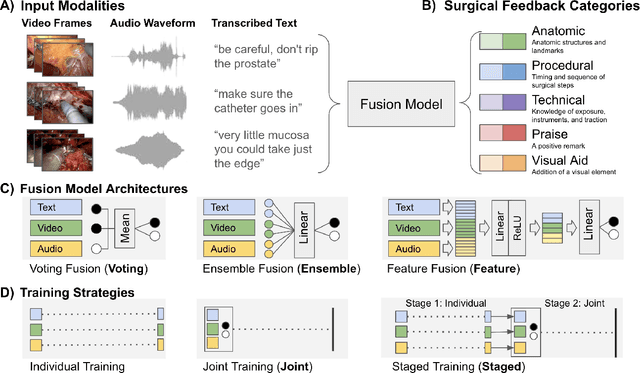

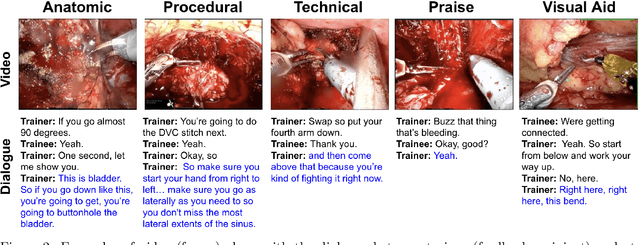
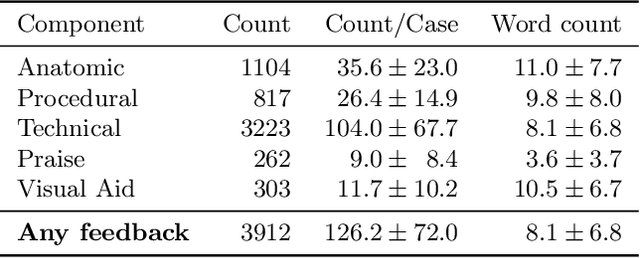
Quantification of real-time informal feedback delivered by an experienced surgeon to a trainee during surgery is important for skill improvements in surgical training. Such feedback in the live operating room is inherently multimodal, consisting of verbal conversations (e.g., questions and answers) as well as non-verbal elements (e.g., through visual cues like pointing to anatomic elements). In this work, we leverage a clinically-validated five-category classification of surgical feedback: "Anatomic", "Technical", "Procedural", "Praise" and "Visual Aid". We then develop a multi-label machine learning model to classify these five categories of surgical feedback from inputs of text, audio, and video modalities. The ultimate goal of our work is to help automate the annotation of real-time contextual surgical feedback at scale. Our automated classification of surgical feedback achieves AUCs ranging from 71.5 to 77.6 with the fusion improving performance by 3.1%. We also show that high-quality manual transcriptions of feedback audio from experts improve AUCs to between 76.5 and 96.2, which demonstrates a clear path toward future improvements. Empirically, we find that the Staged training strategy, with first pre-training each modality separately and then training them jointly, is more effective than training different modalities altogether. We also present intuitive findings on the importance of modalities for different feedback categories. This work offers an important first look at the feasibility of automated classification of real-world live surgical feedback based on text, audio, and video modalities.